How to Choose the Right Bike Size and Fit in the UAE
New to cycling in Dubai or Abu Dhabi? Learn how to choose the right bike size and fit so your first rides are comfortable, safe and pain-free.
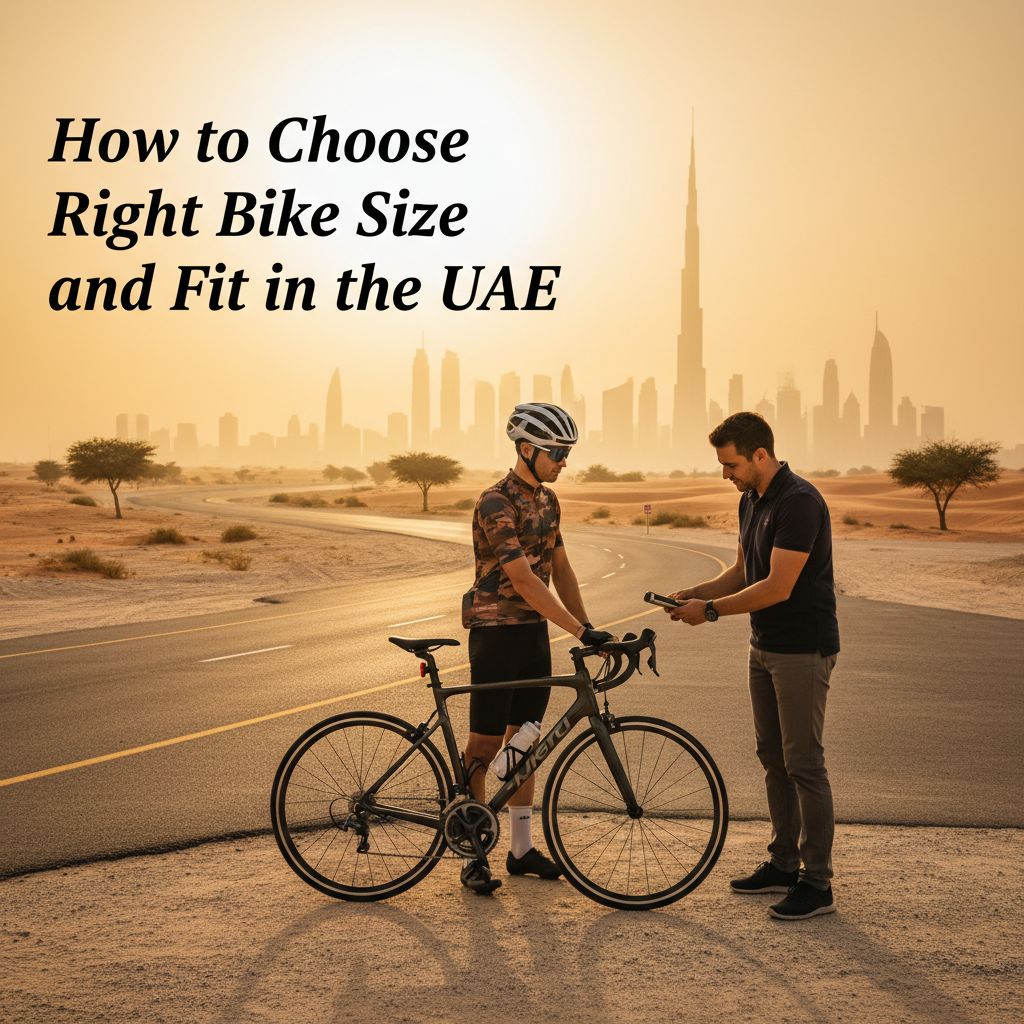
Getting your bike size and fit right is the single most important decision a new rider in the UAE can make. A bike that is too big or too small feels twitchy, causes sore knees and a painful lower back, and can put you off cycling altogether. Get it right, and your first laps around Al Qudra or an early-morning commute in Abu Dhabi will feel natural and comfortable. This guide walks you through frame sizing, the measurements that matter, and how to fine-tune your fit for long rides in the Gulf heat.
Why bike size and fit matter more than you think
Frame size determines your reach to the handlebars, your saddle height and how upright or aggressive your riding position is. In the UAE, where rides are often long and hot, a poor fit becomes obvious fast: you overheat, your hands go numb, and your neck aches within 20 kilometres. A correctly sized bike lets you spread your weight properly, pedal efficiently and stay in control, which matters on shared tracks like Nad Al Sheba and on open roads.
The right size also improves safety. When you can comfortably reach the brakes and put a foot down at stops, you are far more confident in traffic and around other riders. If you are still deciding on a bike type before you size it, our guide to gravel vs road vs hybrid bikes for UAE riders is a good starting point.
The measurements that actually decide your size
Two numbers do most of the work when picking a frame:
- Your height — the quickest starting point for any manufacturer size chart.
- Your inside leg (inseam) — measure barefoot from the floor to your crotch. This is more reliable than height alone, especially if your legs are longer or shorter than average.
Most brands publish size charts in ranges (for example S, M, L or 52cm, 54cm, 56cm). If your height falls between two sizes, your inseam and flexibility decide which way to go: longer legs and good flexibility lean towards the bigger size; a shorter reach preference or less flexibility leans towards the smaller one. For gravel bikes in particular, geometry differs from road, so check our dedicated gravel bike size chart before buying.
Setting saddle height and reach
Once the frame is right, the saddle and cockpit fine-tune your fit:
- Saddle height: With your heel on the pedal at the bottom of the stroke, your leg should be almost straight. When you move to the ball of your foot, you get a slight bend in the knee — that is close to ideal.
- Saddle fore/aft: With the pedals level, your forward knee should sit roughly over the pedal axle. This balances pressure between hands and seat.
- Reach to the bars: You should have a slight bend in your elbows and be able to reach the brakes without stretching. Too long a reach strains your neck and shoulders on long UAE rides.
Small changes matter. Even a centimetre of saddle height can be the difference between comfort and knee pain over a two-hour ride.
Fit for the UAE climate and terrain
Heat changes how fit feels. When you ride in Dubai's warmer months, you shift position more, grip harder and fatigue faster — so a slightly more relaxed, upright fit is often better for new riders than an aggressive racing position. It keeps your neck and hands happier over distance. Before your first big outing, read our advice on cycling safely in Dubai's heat and how to plan around it.
Terrain matters too. Smooth loops like Al Qudra suit a lower, faster position, while rougher gravel and desert edges reward a more upright, controlled setup with wider tyres. If you are unsure where you will ride most, our overview of the best cycling tracks in Dubai helps you match your fit to real routes.
Common fit mistakes new riders make
- Buying too big: A larger frame is not "more comfortable" — it usually means an over-stretched, unstable position.
- Saddle too low: Feels safe at first but wrecks your knees and wastes power.
- Ignoring contact points: Saddle, grips and pedals make or break comfort. Upgrading these is often cheaper and more effective than a new frame.
- Skipping a test ride: Numbers get you close, but a short ride confirms whether the bike suits your body.
If you are shopping online rather than in-store, follow the sizing steps carefully and check return policies — our guide to buying from an online bike shop in Dubai explains how to size confidently without an in-person visit.
When to consider a professional fit
Most new riders can get 90% of the way with a good size chart and careful saddle setup. But if you have recurring knee, back or hand pain, or you are stepping up to long weekend rides, a professional bike fit is worth it. It fine-tunes cleat position, saddle choice and bar height for your body. If you plan to add clipless pedals later, get familiar with them first via our beginner's guide to clipless pedals, since cleat setup is part of a proper fit.
Start with the right frame size, set your saddle and reach carefully, and adjust based on how your body feels over the first few rides. Comfort builds confidence — and confidence is what keeps you cycling in the UAE all season long.
Cycling Editor at WinRider Dubai
Lucas Bernard is WinRider's Cycling Editor and the voice behind most of the brand's long-form guides, comparison articles and buying advice. With a background in cycling journalism in Europe before relocating to the UAE, Lucas combines product expertise with a clear, practical writing style aimed at UAE riders. He works closely with WinRider's Dubai workshop team to make sure every recommendation is grounded in what's actually in stock, road-tested and supported locally with full warranty and after-sales service.
View all articles by Lucas →You Might Also Like
Frequently Asked Questions
Everything you need to know before buying