Tubeless Tyres Explained for Gravel and Road in the UAE
A clear, practical guide to tubeless tyres for gravel and road cycling in the UAE, covering setup, sealant, pressures and how to handle punctures in the heat.
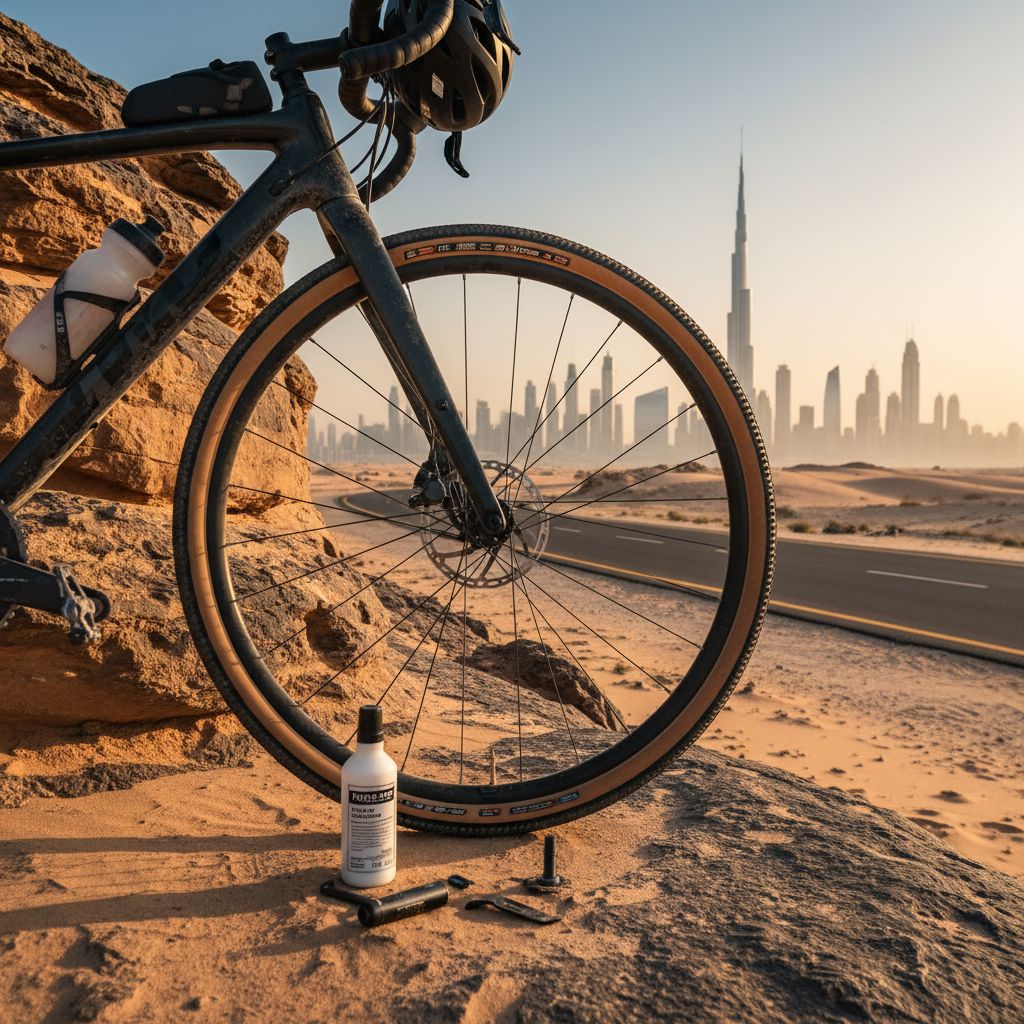
If you ride gravel or road in the UAE, you have probably heard riders swear by tubeless tyres. On the sharp gravel of Al Qudra's outer loops or the long tarmac stretches around Nad Al Sheba, going tubeless can mean fewer flats, better grip and a more comfortable ride. But the technology also comes with quirks that matter more in our heat and dust. This guide breaks down exactly how tubeless works, why it suits UAE conditions, and how to set it up without the mess.
What tubeless tyres actually are
A traditional clincher tyre holds an inner tube filled with air. A tubeless system removes the tube entirely. Instead, an airtight rim, a tubeless-ready tyre and a liquid sealant work together to hold pressure. The tyre bead locks tightly onto the rim, and a splash of sealant inside plugs small holes automatically as you ride.
For this to work you need three things: tubeless-compatible rims (most modern gravel and road wheels are), tubeless-ready tyres, and sealant. You also seal the rim with tubeless tape and fit a tubeless valve. Once inflated and seated, the tyre holds air on its own.
Why tubeless makes sense for UAE riding
Our terrain and climate are genuinely tough on tyres, and tubeless answers several of those problems at once.
- Fewer punctures: Desert gravel is full of sharp flint and thorns. Sealant seals small punctures instantly, so a thorn that would flat a tube often goes unnoticed tubeless.
- Lower pressures, more grip: Without a tube, you can run lower pressures without pinch flats. That means more traction on loose gravel and a smoother ride on rough tarmac.
- Comfort on long rides: Lower pressure absorbs vibration, which helps on the long, exposed routes cyclists tackle here. Pair that with smart hydration and nutrition for long rides in the Gulf heat and you will finish fresher.
- Speed: On the road, tubeless setups can reduce rolling resistance compared with a tyre and tube of the same width.
If you are still deciding between bike types, our comparison of gravel versus road bikes for Dubai cycling is a useful starting point, since tyre choice follows the bike you ride.
Tubeless for gravel vs road: the differences
The core technology is the same, but the priorities shift.
Gravel: This is where tubeless shines most. Wider tyres (40mm and up) at low pressure protect against the flint and thorns of routes like the desert edges near Al Qudra. Puncture protection is the headline benefit. If you are dialling in your setup, see our guide on how to set up a gravel bike for Dubai desert riding.
Road: Modern road wheels increasingly favour 28mm to 32mm tubeless tyres. The gains are lower rolling resistance, better grip in corners and fewer flats from road debris. Pressures are higher than gravel but still lower than an equivalent tube setup.
Setting up tubeless: the practical steps
You can do this at home with a bit of patience, though a good workshop makes it painless.
- Fit tubeless tape to the rim, covering the spoke bed cleanly with no wrinkles.
- Install the tubeless valve through the tape.
- Mount one bead of the tyre, add sealant into the tyre (or through the valve), then seat the second bead.
- Inflate rapidly. A tubeless-specific pump, a charger pump or a compressor helps the beads pop into place with a distinct snap.
- Spin the wheel to spread the sealant, then check pressure and top up as needed.
If any of that sounds daunting, you do not have to go it alone. Our overview of where to service your bicycle in Dubai covers workshops that can set up tubeless correctly the first time.
Sealant and heat: what UAE riders must know
Sealant is the heart of a tubeless system, and heat affects it. In UAE temperatures, sealant dries out faster than in cooler climates. A tyre topped up in November may be nearly dry by spring if left unchecked.
- Check every 1 to 3 months: Add sealant more often in summer. Dried sealant cannot seal punctures.
- Store bikes out of direct sun: Constant heat accelerates drying and can affect the tyre bead. Our desert climate maintenance guide has more on protecting your bike from sand and heat.
- Carry a backup: Even tubeless riders should carry a spare tube, tyre plugs and a mini pump or CO2 for punctures too big to seal.
Common tubeless mistakes to avoid
- Running too little sealant, so punctures do not seal.
- Using non-tubeless tyres or rims and expecting them to hold air.
- Ignoring pressures. Too low invites rim strikes; too high loses the comfort and grip advantage.
- Forgetting to top up sealant before a big ride in the cooler season.
Getting your tyres right is one part of a well-rounded setup. Rounding it out with the right cycling accessories for UAE riders, such as a reliable pump and plug kit, means you are prepared for whatever the route throws at you.
Is tubeless worth it for you?
For most gravel riders in the UAE, tubeless is a clear win thanks to puncture protection. For road riders, it depends on your wheels and how much you value fewer flats and lower rolling resistance. If your wheels are tubeless-ready, the upgrade is well worth trying. If not, you can still ride tubeless-ready tyres with tubes and switch later.
Cycling Editor at WinRider Dubai
Lucas Bernard is WinRider's Cycling Editor and the voice behind most of the brand's long-form guides, comparison articles and buying advice. With a background in cycling journalism in Europe before relocating to the UAE, Lucas combines product expertise with a clear, practical writing style aimed at UAE riders. He works closely with WinRider's Dubai workshop team to make sure every recommendation is grounded in what's actually in stock, road-tested and supported locally with full warranty and after-sales service.
View all articles by Lucas →You Might Also Like
Frequently Asked Questions
Everything you need to know before buying