Tubeless Tyres Explained for Gravel and Road in the UAE
How tubeless tyres work for gravel and road, plus UAE-specific tips on sealant in the heat, pressures and setup so you ride with fewer flats.
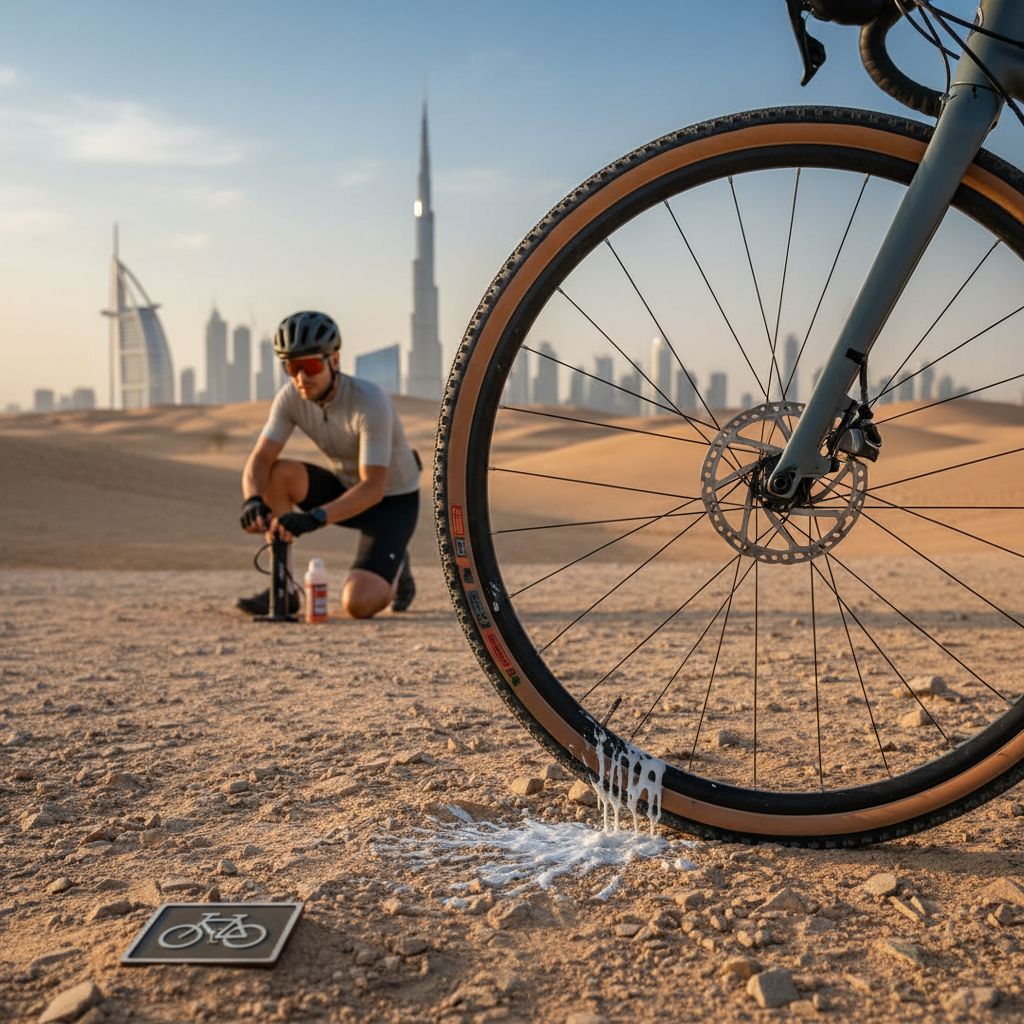
If you ride gravel or road in the UAE, tubeless tyres are one of the few upgrades that genuinely change how your bike feels every single ride. Fewer punctures from camel-thorn and sharp gravel, lower pressures for grip on loose surfaces, and a smoother feel on long tarmac days — all without the dreaded inner tube. But tubeless also comes with its own quirks, and the Gulf heat adds a twist that riders in cooler climates never think about. Here's a clear, practical guide for UAE conditions.
What are tubeless tyres and how do they work?
A traditional clincher tyre holds air inside a separate inner tube. A tubeless setup removes the tube entirely: the tyre seals directly against an airtight rim, and a liquid sealant inside the tyre plugs small holes the moment they happen. To run tubeless you need three things working together — a tubeless-ready rim, a tubeless-ready tyre, and tubeless valves plus sealant. Many modern gravel and road bikes already ship with tubeless-ready wheels, so often you only need tyres, valves and sealant to make the switch.
The magic happens with the sealant. As you ride, centrifugal force keeps a thin film coating the inside of the tyre. When a thorn or shard of gravel makes a small hole, sealant rushes to the gap and dries almost instantly, sealing the puncture before you even notice it. This is why tubeless is so popular on the loose tracks and stony desert routes around Dubai and the Northern Emirates.
Why tubeless makes sense for UAE gravel and road riding
Our terrain is unforgiving. Sharp limestone gravel, hidden thorns and the odd bit of construction debris all puncture inner tubes quickly. Tubeless tyres shrug off most of these without stopping. The benefits stack up clearly:
- Far fewer flats — small punctures self-seal, so a thorn no longer ends your ride at Al Qudra.
- Lower pressures, more grip — without a tube to pinch, you can run softer tyres for better traction and comfort on gravel and rough tarmac.
- Smoother ride — lower pressure absorbs vibration, which matters on long Gulf rides where fatigue creeps in.
- Slight efficiency gain — no tube friction means marginally lower rolling resistance.
If you're still deciding what bike platform suits you, it's worth reading our breakdown of gravel bike vs road bike for Dubai cycling and our overview of the best gravel bikes for UAE terrain, since tubeless pairs especially well with gravel setups.
Sealant and tyre pressure in the Gulf heat
This is where the UAE differs from everywhere else. Tubeless sealant is water- or latex-based, and high temperatures make it dry out faster. In Dubai summer, sealant inside a tyre can lose effectiveness in weeks rather than months, especially if the bike is parked in a hot garage or car boot. A few habits keep you covered:
- Top up sealant more often. Check every 6–8 weeks in summer instead of every few months. Spin the wheel and listen for liquid sloshing — if you hear nothing, it's dry.
- Store the bike out of direct heat where possible. The same heat that ages your sealant also stresses your tyres and chain.
- Watch your pressure on hot tarmac. Heat expands the air inside, so set pressure when the tyre is cool and avoid over-inflating before a midday ride.
For pressure, tubeless lets you go lower than tubed setups. As rough guidance, gravel riders often run roughly 25–40 psi depending on rider weight and tyre width, while road riders on 28–32mm tyres typically sit around 50–70 psi. Lighter riders and rougher surfaces favour the lower end. Always stay within the pressure range printed on your tyre sidewall.
Setting up tubeless: what to expect
Converting to tubeless is straightforward but a little messy the first time. You'll fit tubeless rim tape (if not already installed), insert tubeless valves, mount the tyre, add the recommended sealant, then inflate quickly — usually with a high-volume pump, air compressor or tubeless inflator canister to seat the bead with a satisfying pop. After that, you spin and shake the wheel so sealant coats the inside.
If you'd rather not wrestle with bead-seating and sealant on your kitchen floor, many riders have it done professionally. Our guide to where to service your bicycle in Dubai covers your options, and tubeless setup pairs naturally with regular care — see gravel bike maintenance for the UAE desert to keep everything running in our climate.
What to carry on a tubeless ride
Tubeless is not invincible. A large gash or sidewall cut can be too big for sealant to handle. Always carry:
- A tubeless plug kit (bacon strips) for bigger holes — quick and effective on the trail.
- A spare inner tube as a last resort if a tyre completely fails — you remove the valve and fit a tube.
- A pump or CO2, tyre levers and a small bottle of sealant if you ride far.
These belong in every saddle bag alongside your other kit — see our rundown of essential cycling accessories for UAE riders. And before any long desert or gravel day, dialling in your whole setup helps; our guide on how to set up a gravel bike for Dubai desert riding goes deeper on tyres, gearing and comfort.
Is tubeless worth it for you?
For gravel riders in the UAE, tubeless is close to essential — the puncture protection alone justifies the small extra maintenance. For road riders, it's increasingly the default on new bikes and offers real comfort and reliability benefits on our long, exposed routes. The trade-off is a bit more upkeep: topping up sealant, checking pressures and occasionally cleaning dried sealant. If you're happy with that routine, the everyday ride quality and the freedom from roadside tube changes make tubeless a clear win.
Cycling Editor at WinRider Dubai
Lucas Bernard is WinRider's Cycling Editor and the voice behind most of the brand's long-form guides, comparison articles and buying advice. With a background in cycling journalism in Europe before relocating to the UAE, Lucas combines product expertise with a clear, practical writing style aimed at UAE riders. He works closely with WinRider's Dubai workshop team to make sure every recommendation is grounded in what's actually in stock, road-tested and supported locally with full warranty and after-sales service.
View all articles by Lucas →You Might Also Like
Frequently Asked Questions
Everything you need to know before buying