Tubeless Tyres Explained for Gravel and Road in the UAE
A clear, practical guide to tubeless tyres for gravel and road cyclists in the UAE, covering setup, sealant in the heat, pressures and real-world benefits.
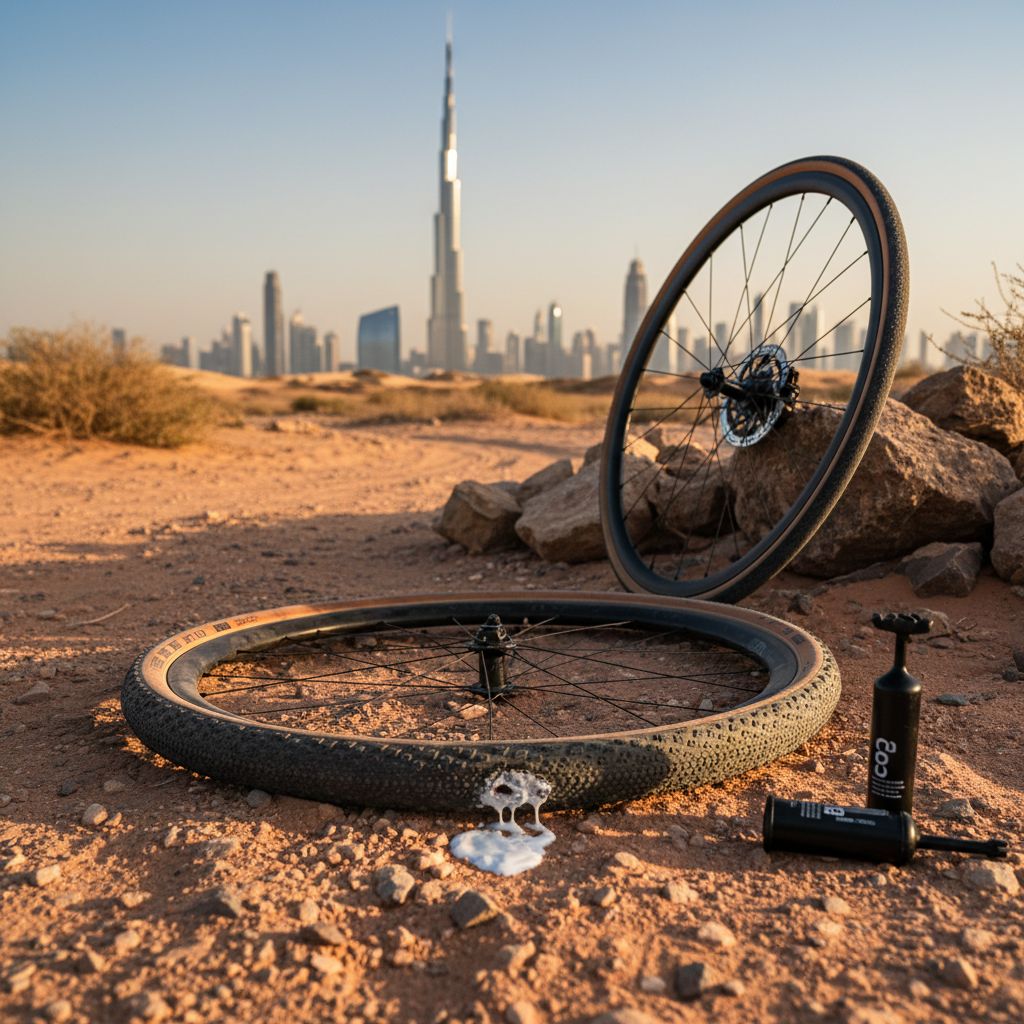
If you ride gravel or road in the Emirates, chances are you have heard other cyclists swear by going tubeless. In this guide, tubeless tyres are explained in plain language for gravel and road riders in the UAE, with specific attention to the heat, the fine desert sand and the kind of terrain you actually ride at Al Qudra, Nad Al Sheba and the trails around Hatta. Whether you are curious or already thinking about a conversion, here is what matters.
What tubeless tyres actually are
A traditional clincher setup uses an inner tube inside the tyre. A tubeless system removes the tube entirely. Instead, the tyre bead locks tightly against a sealed (tubeless-ready) rim, a valve goes directly through the rim, and a liquid sealant is poured inside. That sealant sloshes around as you ride and instantly plugs small punctures from thorns, flint and sharp grit before you even notice.
For this to work you need three compatible parts: a tubeless-ready tyre, a tubeless-ready rim with sealing tape, and the right valve and sealant. Most modern gravel bikes and many mid-to-high-end road bikes now ship tubeless-ready, so you may already own half of what you need.
Why UAE riders benefit from tubeless
Our riding conditions make a strong case for tubeless. Desert and semi-desert trails are littered with camel thorn, sharp limestone and embedded debris that shred inner tubes. Even smooth road loops collect fine glass and grit near construction zones. Tubeless sealant handles most of these on the fly.
- Fewer flats: small punctures seal themselves, which is a real advantage on long, remote loops where help is far away.
- Lower pressures: without a tube, you can run softer tyres for more grip and comfort on loose surfaces without pinch flats.
- Comfort on rough tracks: the extra cushioning makes a big difference on the washboard sections you find on many of the best gravel routes in Dubai and the UAE.
- Speed: lower rolling resistance compared with a tube-plus-tyre combo at the same pressure.
If you are still deciding what kind of bike suits your riding, our comparison of gravel, road and hybrid bikes for UAE riders is a useful starting point before you commit to a tubeless wheelset.
The honest drawbacks
Tubeless is not magic. Setup can be fiddly and sometimes needs a compressor or a dedicated tubeless pump to seat the bead. Sealant is messy and needs topping up. Big cuts that the sealant cannot close will still require a tyre plug or, worst case, fitting an emergency tube. And here is the UAE-specific catch: heat dries sealant out faster.
In our summer temperatures, latex-based sealant can thicken and dry inside the tyre within weeks rather than months. That means you need to check and refresh it more often than cyclists in cooler climates. It is a small chore, but ignoring it leaves you riding on dried-up sealant that no longer seals anything.
Tyre pressure for gravel and road in the heat
Pressure is where tubeless really pays off, but the correct number depends on your weight, tyre width and surface. As a rough guide, gravel riders often run roughly 25 to 40 psi depending on terrain and tyre volume, while road tubeless typically sits higher, often in the 50 to 75 psi range for wider modern road tyres. Heavier riders and rougher tracks push these numbers up.
Remember that heat increases the air pressure inside a tyre. If you pump to your target in an air-conditioned garage and then ride out into the sun, pressure climbs. Set up slightly on the lower side and check again before you roll. Pairing the right pressure with good cycling accessories like a quality floor pump and a digital gauge makes consistent setup much easier.
Setting up and maintaining tubeless in the UAE
A basic tubeless conversion looks like this: tape the rim, fit the valve, mount the tyre, add sealant through the valve, then inflate hard to pop the bead into place. From there, keep these habits:
- Check sealant monthly in summer, every two to three months in winter. Add a splash before it fully dries.
- Carry a plug kit, a spare tube and tyre levers on every ride, because big gashes still happen.
- Rinse off dust after sandy rides. Fine grit works its way into everything, which is also why our guide to protecting your drivetrain from sand in the desert is worth a read alongside tyre care.
- Keep the whole bike clean, including the chain. A simple routine from our chain cleaning and lubrication guide keeps your tubeless-equipped bike running smoothly in dusty conditions.
Is tubeless worth it for you?
If you ride gravel in the UAE, tubeless is close to essential given the thorns and sharp rock. For road riders who log long weekend kilometres or race, the comfort, speed and puncture protection are compelling too. If you only ride short, smooth urban loops and dislike maintenance, a well-set-up clincher with tubes is still perfectly reasonable. For most dedicated riders here, though, the small extra upkeep is a fair trade for far fewer roadside repairs under a blazing sun.
Whatever you choose, make sure your frame, wheels and fit all suit your riding before worrying about tyres. If you are shopping for something new, our overview of the best gravel bikes for UAE terrain highlights models that come tubeless-ready out of the box.
Cycling Editor at WinRider Dubai
Lucas Bernard is WinRider's Cycling Editor and the voice behind most of the brand's long-form guides, comparison articles and buying advice. With a background in cycling journalism in Europe before relocating to the UAE, Lucas combines product expertise with a clear, practical writing style aimed at UAE riders. He works closely with WinRider's Dubai workshop team to make sure every recommendation is grounded in what's actually in stock, road-tested and supported locally with full warranty and after-sales service.
View all articles by Lucas →You Might Also Like
Frequently Asked Questions
Everything you need to know before buying